

The Focus Blog

Succession on the farm isn't a single handover day. It's years of conversations, plans and decisions, and the families who get it right treat it that way.
Over the next decade, hundreds of billions of dollars in farming assets will change hands. In New Zealand, more than half of farmers will reach 65 in that same window. Succession has always been part of farming life, but rarely has so much been set to move at once.
Over the 45 years Farm Focus has been operating, we've seen succession play out across thousands of farming families. The ones that go well tend to share the same habits. Few families show them more clearly than the Penfolds, the family behind Four Daughters Beef. Karen Penfold, CFO of the family group, recently spoke to Australian CA ANZ members about her family's succession and her own part in it. She was joined by the family's finance partner, Adam Keen of Homestead Agribusiness.
Karen has been through succession twice. The first time ended in 2005, with Karen and her husband Dan leaving the family business with four children under eight. The second time has looked very different. All four daughters now work in the business, which turns over about 13,000 head of cattle a year.
The gap between those two experiences holds seven lessons for farming families and the advisors who support them. You can listen to the full conversation here.
In most small businesses, succession is a transaction. The owner sells up and takes the capital out to fund retirement. On the farm, it's a transition. The aim is to keep capital in the business and the land in the family.
"In other commercial enterprises, you're trying to extract value out of a business at time of succession," says Adam Keen. "In these ones, we're trying to extend the legacy."
That changes the goal. A good plan builds a trading business strong enough to pay each generation well, so nobody needs to sell land to get their share. As Adam puts it, "you only get one opportunity at selling a piece of land."
The Penfolds have gone a step further and dropped the word succession altogether. "People nearly shudder when it's brought up," says Karen. "Succession is a handing on of assets." They talk about business transition instead. The land is the legacy and the business is the vehicle. Conversations focus on creating wealth, paying everyone well and growing personal investments, not on who gets which asset.

Family businesses can't separate emotion from business. What they can do is agree on the principles that guide decisions before the hard conversations start.
The Penfolds began their second succession with two days in a room and an independent facilitator. Each person worked out what they valued as an individual, then as a family, on a big sheet of butcher's paper. Karen admits she didn't see the point at first. Two and a half years on, those values "frame absolutely every decision we now make as a family".
Their values are:
What makes them work is that they're used, not filed. They live on the fridge. Family meetings open with a check-in on them. They're reviewed every year, and they're now written into staff employment contracts.
The payoff shows up in everyday calls. When Karen's son-in-law Tom proposed running 90 mm poly pipe from a new bore to the house, Karen asked if that was overkill. Tom pointed at the fridge. "One of our values is to think big. In 10 years' time, 75 mm poly isn't going to be good enough." They went with the 90 mm.
One condition matters most: everyone has to write them. "It had to be absolutely everybody that had ownership," says Karen.
Succession plans often stall because the people affected aren't heard until it's too late. Bringing in-laws and partners into the conversation early surfaces ideas, and concerns, while there's still time to act on them.
Tom joined his first Penfold planning session before he'd married their daughter Molly. When he said he was there to support Molly, Karen pressed for more: "That's a really nice right answer, but I want to know what's in your head." His answer reshaped the plan. He suggested the family stay together and keep growing for the next 18 years before splitting anything up.
The family agreement also gives each person an individual vote, rather than one vote per couple. "Different opinion isn't negative," says Karen. "It's another way to think, and maybe we can all get better because of that."
No single advisor can carry a farm succession. It takes the accountant, the lawyer and the financier, each bringing a different lens, and each seeing what the others see.
The Penfolds have built that team around total transparency. Every advisor, all four daughters and their partners are copied into every email. Each advisor comments in their own colour, so the family can see the legal, tax and lending view on any question in one place.
The accountant sits at the centre. Karen has worked with hers for 30 years and credits her with setting up the entities and structures that made the transition possible.
For advisors, the lesson is to welcome new voices. "If someone else is introduced to the relationship by a family you're working with, there's probably been a feeling that there's a need for that person to be involved," says Adam. Karen herself was against using a broker at first. What won her over was a focus on the family's 10-year goals, not interest rates.
A joined-up team also protects each family member's own wealth. Resentment builds when people feel they "can't do anything unless they ask permission from the business," says Adam. Getting value out, and keeping it protected, takes every advisor working together.
The best-run family farms borrow the planning rhythm of a corporate. The Penfolds work to a 10-year plan, a 3-year plan, a 12-month plan and 90-day goals. They review strategy once a year and meet quarterly, with strategy and operations on the same agenda. "We can't have strategic without operations," says Karen.
Ambition has to translate into profit. Growing from 13,000 head to 15,000 means little unless the profit line grows with it. The plan needs to work back from the goal to the contract values and margins that will deliver it.
That only works with good records. Karen reconciles continuously and does the BAS every month, so the accountant can plan tax early. Every Tuesday, she shares a simple spreadsheet in the family chat: cash at bank, bills due and money coming in. "No secrets," she says. "Educate them in finance, educate them in communication, and you'll all get better together as a family."
It's tempting to wait until the next generation is older or settled. The Penfold daughters were between 19 and 25 when they first sat at the planning table, answering big questions like whether they still wanted to live in the bush in 10 years. They were also told they could change their minds.
Early conversations are also the right time to address entitlement. "You're not entitled to anything. What are you bringing to the table?" says Karen. Each family member can make a living on the land or elsewhere. If they choose the land, the plan has to show how.
Adam sees today's next generation as ready for it. "They're well educated, they've got more desire to be involved than ever before. Delaying the conversation with them will do you more disservice than service."
Succession advice isn't cheap, and families can balk at the bills. The Penfolds see it as an investment. "Expert knowledge doesn't come free," says Karen. "Spending the money now will save us money later."
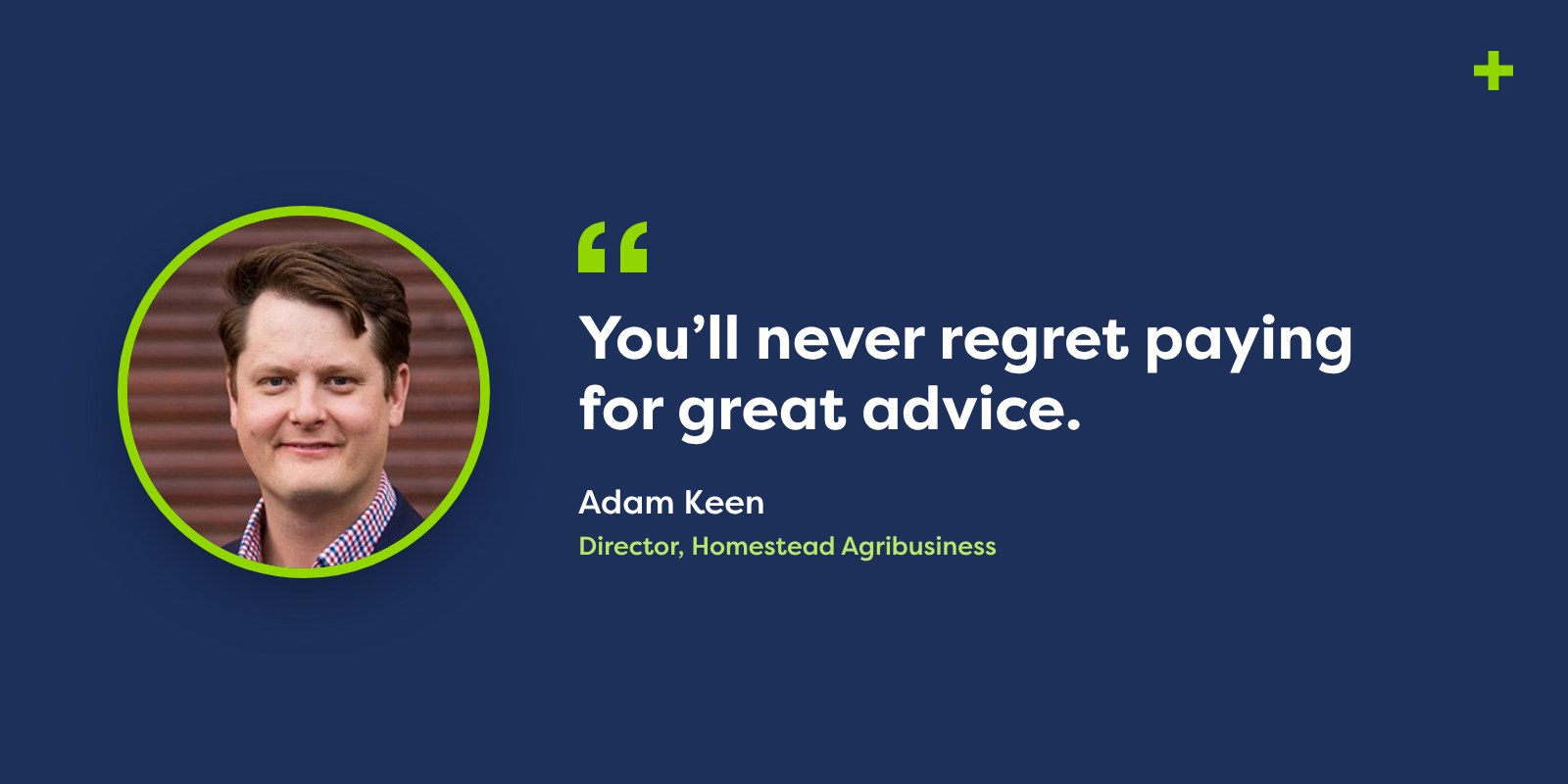
Adam puts it more simply: "You'll never regret paying for great advice." For advisors, structuring fees around milestones helps. The family pays as each stage is delivered, so there are no surprises and the value is clear along the way.
If there's one thread running through all seven lessons, it's communication. "Hands down, communication is absolutely everything," says Karen. "Not just communication, respectful communication." The Penfolds weren't good at it the first time around. They've since built processes to make it better, and when something goes wrong now, the family can usually trace it back to a gap in communication.
The second thread is timing. "It's never too early to start the conversation," says Adam. For accountants, that means not waiting for a customer to raise succession. If a farming family needs to start planning, be the one who gets them talking. If another advisor could add value, make the introduction. "They'll never forget it, and neither will their family."
For families, the first practical step is setting goals together. Get everyone in the room, write the goals down and agree how you'll check progress.
Every part of the Penfold story comes back to clear, shared, up-to-date financial records. It's how the family makes decisions quickly, how their accountant plans tax early, and how their advisors stay on the same page.
That's what we've been helping farming families do for 45 years. More than 10,000 farms have used Farm Focus to understand their numbers, with farmers and their accountants working from the same live records. When the big conversations happen, everyone sees the same picture.
If you're an accountant working with farming families, we'd love to show you how Farm Focus works with your practice. Book a demo with our team. CA ANZ members also get an exclusive discount on their first year.
With thanks to Karen Penfold and Adam Keen for sharing their experience so openly. Watch the full conversation on YouTube.